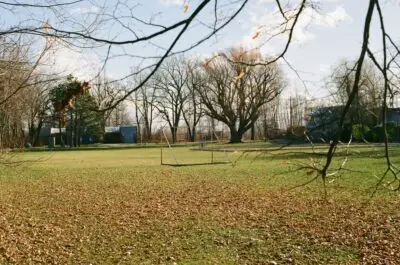
For many schools, the playground is where outdoor learning begins – and where it quietly stalls.
It is often seen as a compromise. Something to apologise for. A space schools feel they have to move beyond before outdoor learning can really count.
“Our playground is just tarmac.”
“There’s nothing natural out there.”
“It’s not very inspiring.”
And yet, for most children, the playground is the outdoor space they know best. It is familiar, accessible, and used every day. That matters more than we often acknowledge.
The overlooked strengths of hard-surface spaces
Hard-surface playgrounds are predictable. That predictability is not a weakness.
For many learners – particularly those who struggle with regulation, transitions, or sensory overload – predictability provides safety. Children know where they are. They understand the boundaries. They can focus on learning rather than orienting themselves to a new environment.
These spaces are also:
- immediately accessible to all pupils
- usable in short time windows
- easy to return to regularly
- close to indoor resources and support
That proximity reduces the logistical load on staff and makes outdoor learning more likely to happen consistently rather than occasionally.
Consistency is not a consolation prize. It is one of the strongest drivers of impact.
When familiarity becomes a barrier
Of course, playgrounds carry baggage.
They are often associated with breaktime behaviour, social conflict, and supervision rather than learning. Patterns established during playtimes can bleed into lesson time if they are not deliberately reshaped.
This is not a reason to avoid the playground. It is a reason to use it differently.
Outdoor learning in playground spaces works best when there is a clear shift in tone and purpose. Children need to know that this is not “playtime moved outside”, but learning that happens to be outdoors. Explicitly explaining this to the children can make a world of difference to behaviour.
That shift does not require new equipment or major redesign. It requires adult clarity.
What playgrounds are particularly good at
Hard-surface spaces lend themselves well to learning that involves:
- pattern, number, and scale
- movement and embodied understanding
- sound, echo, and observation
- weather and seasonal change
- repetition over time
They are especially strong for:
- short, focused learning moments
- building routines and expectations
- supporting regulation through movement
- revisiting the same learning focus regularly
These are not secondary forms of learning. They are foundational ones.
The danger of trying to “add nature”
When schools feel their playground is lacking, the instinct is often to add something, planters, loose parts, artificial grass, or themed zones.
Sometimes these additions are helpful. Sometimes they add complexity without changing practice.
A concrete playground does not need to be transformed into something else to be valuable. In fact, constantly trying to disguise what a space is can distract from what it already offers.
Outdoor learning in playgrounds becomes more powerful when adults stop asking, “How can we make this feel more natural?” and start asking, “What does this space allow us to notice, measure, test, repeat, or explore?”
A small but meaningful shift
One of the most effective changes schools can make in playground-based outdoor learning is to stay in one place for longer.
Rather than moving around the space or introducing something new each session, returning to the same area builds depth. Children begin to notice change. Adults begin to notice learning. Routines settle.
That depth is often mistaken for boredom, but it is usually the opposite.
When children know a space well, they are freed to think more deeply within it.
Once that shift is made, many schools find that ideas which once felt out of reach become not only possible, but surprisingly simple.
Holding the playground in context
The playground does not need to be defended, justified, or framed as a stepping stone to somewhere better.
It is one part of a wider learning ecology, and for many schools, it is the most realistic place for outdoor learning to embed.
Used thoughtfully, hard-surface spaces support regulation, consistency, and inclusion. They allow outdoor learning to become part of the school’s rhythm rather than an occasional event.
That is not a limitation.
It is a strength.
What outdoor learning can actually look like in a concrete playground
When schools say they have “just a concrete playground”, what they are often really saying is that they can’t picture what learning might look like there.
Concrete spaces don’t lend themselves to fantasy in the same way woodland does, but they are exceptionally good at supporting real learning.
Here are some ways schools use hard-surface playgrounds effectively, not as one-off activities, but as repeatable practices.
Using the ground as a thinking tool
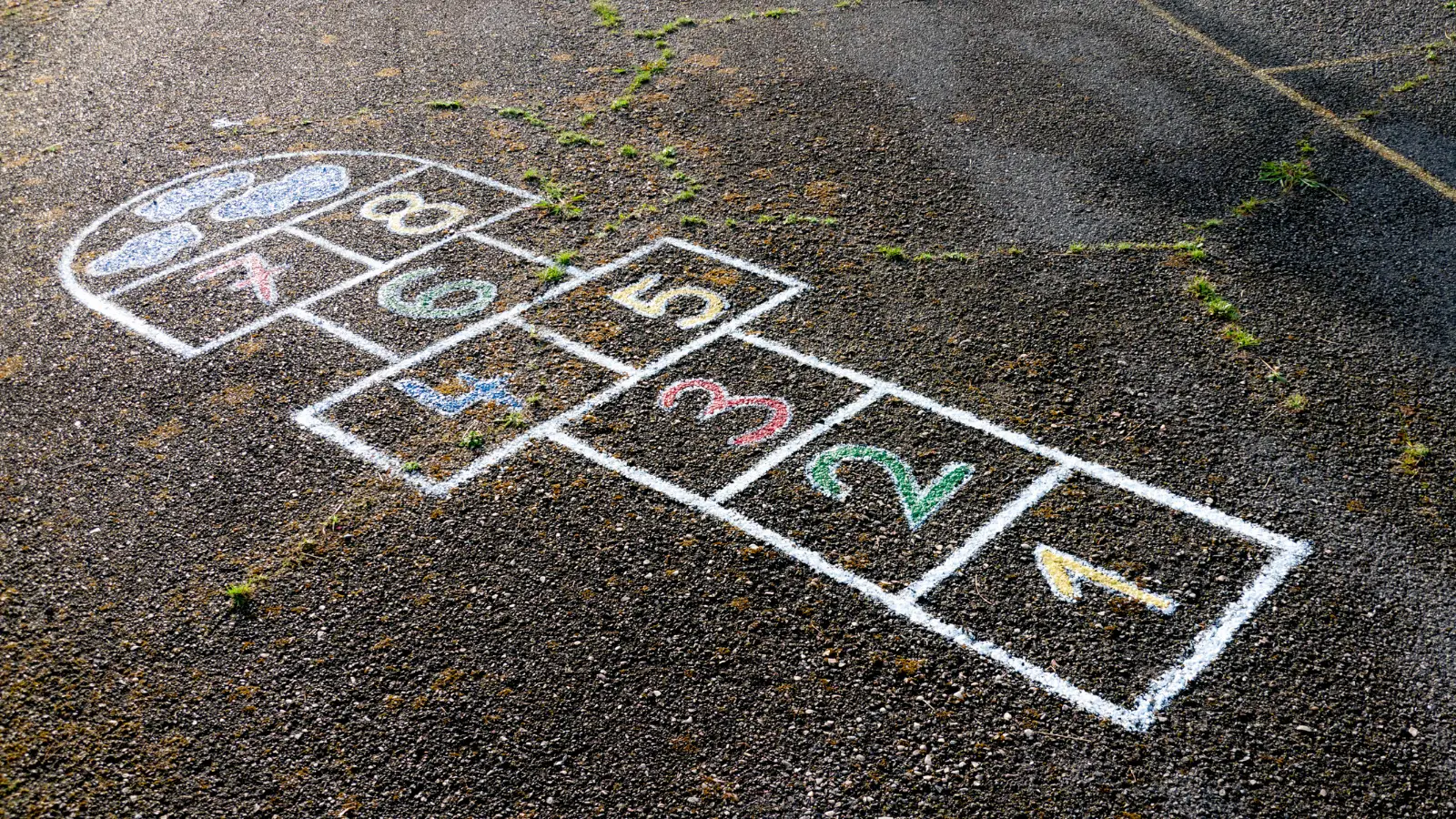
Playgrounds are ideal for learning that involves number, measure, and pattern. Lines, grids, cracks, shadows, drains, and boundaries offer natural prompts for counting, estimating, measuring, comparing, and classifying. Because these features don’t change quickly, children can return to the same ideas over time and deepen their understanding.
Learning through movement
Concrete spaces support whole-body learning particularly well. Walking distances, pacing out lengths, tracing shapes, following routes, and mapping journeys all help children anchor abstract ideas in physical experience. For many learners, especially those who struggle to sit still, this kind of movement supports focus rather than undermines it.
Sound, echo, and listening
Hard surfaces reflect sound in ways that softer environments don’t. This makes playgrounds excellent for listening activities: noticing echoes, identifying near and far sounds, comparing quiet and noisy areas, or tracking how sound changes with position and movement. These kinds of observations build attention, auditory discrimination, and language.
Weather as a constant teacher
Concrete makes weather visible. Rain collects and moves. Frost shows pattern. Heat changes texture. Shadows shift across the ground during the day. Returning to the same spot allows children to notice seasonal and daily change without needing specialist spaces or equipment.
Repetition with purpose
One of the greatest strengths of playground learning is the ease of repetition. Schools can return to the same place weekly or even daily, asking slightly different questions each time. This supports memory, reflection, and confidence – and dramatically reduces planning load for staff.
Why these ideas matter
None of these approaches require new resources, specialist training, or redesigned spaces. What they require is a shift in how the playground is seen.
When adults view concrete spaces as empty, children tend to experience them that way too. When adults approach them as places for noticing, measuring, testing, and revisiting ideas, learning emerges naturally.
The value lies not in what is added to the playground, but in what is attended to.
A final reminder
Concrete playgrounds do not need to apologise for what they are.
They are consistent.
They are accessible.
They are already part of children’s daily rhythm.
When used intentionally, they don’t limit outdoor learning – they stabilise it.
Next month, the series will look beyond the playground gate to urban streets, thresholds, and edge spaces, and how outdoor learning can expand without increasing pressure or workload.