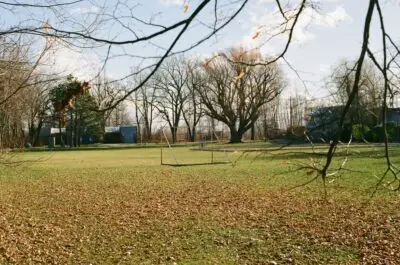
For some schools, outdoor learning begins and ends at the playground gate.
Beyond it lies the street: busy, public, unpredictable. A place associated more with risk assessments than learning opportunities. Threshold spaces, doorways, pavements, car parks, alleyways, edges of fences, can feel even less legitimate. Not quite indoors. Not quite outdoors. Not really anywhere at all.
And yet, these in-between spaces are often where outdoor learning becomes most relevant.
The overlooked value of in-between places
Thresholds and streets are transitional spaces. Children move through them every day, often without thinking. Because of that familiarity, they are powerful places for learning, not despite their ordinariness, but because of it.
Urban edge spaces:
- sit directly within children’s lived experience
- make real-world systems visible
- support short, purposeful outdoor moments
- reduce the pressure to “go somewhere special”
They allow outdoor learning to happen without requiring long sessions, transport, or major timetable disruption.
For many schools, that makes all the difference.
When outdoor learning isn’t about freedom
One of the reasons urban spaces can feel uncomfortable is that they don’t allow for the kind of free movement often associated with outdoor learning.
Behaviour expectations are higher. Adult vigilance is greater. Movement is more contained.
This does not make outdoor learning less authentic, it simply means it is doing a different job.
Urban outdoor learning is particularly strong for:
- orientation and awareness
- understanding shared space
- safety, judgement, and decision-making
- noticing systems, patterns, and change
This is outdoor learning as citizenship, not escape.
Thresholds as learning spaces in their own right
Threshold spaces, just outside a classroom door, beside an entrance, along a wall, are often dismissed as places you pass through rather than stay in.
But these spaces offer something important: low-risk access to the outdoors.
They:
- support gentle transitions
- allow learning outdoors without “going out”
- reduce anxiety for staff and pupils
- make outdoor learning possible on busy or low-energy days
Thresholds are often where outdoor learning becomes sustainable rather than aspirational.
A small but meaningful shift
One of the most helpful shifts schools can make with urban and threshold spaces is to stop seeing them as routes, and start seeing them as destinations.
That might mean:
- pausing rather than passing through
- returning to the same short stretch of pavement regularly
- treating the space just outside the door as a learning site, not a holding area
This shift doesn’t require schools to be braver. It requires them to slow down.
What outdoor learning can actually look like in urban and edge spaces
Urban streets and threshold areas support learning that is rooted in observation, decision-making, and real-world relevance.
Noticing how space is used
Children can observe who uses a space, when, and how. Who walks here? Who waits? Who moves quickly? Who avoids certain areas? These observations support social understanding, geography, and citizenship.
Sound and sensory mapping
Urban environments are rich sensory landscapes. Children can notice near and far sounds, changes in volume, echoes, and how sound behaves around buildings. This supports listening skills, attention, and language.
Safety and judgement work
Rather than treating safety as a list of rules, urban spaces allow children to practise noticing hazards, predicting outcomes, and making decisions with adult support. This builds judgement and self-regulation over time.
Mapping routes and transitions
Short, familiar routes can be mapped, revisited, and reflected on. Children can notice landmarks, changes, and patterns, building spatial awareness and memory.
Threshold routines
Standing just outside the classroom to notice weather, light, temperature, or movement before going back inside allows outdoor learning to happen even on the busiest days. These routines support regulation and attention without increasing workload.
Why these spaces matter
Urban streets and thresholds remind us that outdoor learning does not need to feel separate from everyday life to be valuable.
In fact, some of the most important learning happens when children are supported to understand and navigate the spaces they already inhabit.
These spaces teach awareness, responsibility, and belonging. They help children see themselves as part of a wider world, not removed from it.
A final reminder
Outdoor learning does not always need to feel expansive.
Sometimes its role is to help children slow down, look closely, and make sense of the world just outside the door.
When schools learn to value thresholds and edge spaces, outdoor learning stops being something extra, and starts becoming something embedded.
Next month, the series will move into Wildness at Human Scale, exploring how small, often overlooked encounters with nature can support deep learning even in the most built-up environments.